Built for a strong white foundation on dark-fabric print workflows.
DTF + DTG WHITE PIGMENT INK
White that
shows up.
White ink is the opacity engine behind dark-fabric textile printing. MD develops qualified DTF White Ink and DTG White Ink systems for the complete production process.
Discuss White Ink ↗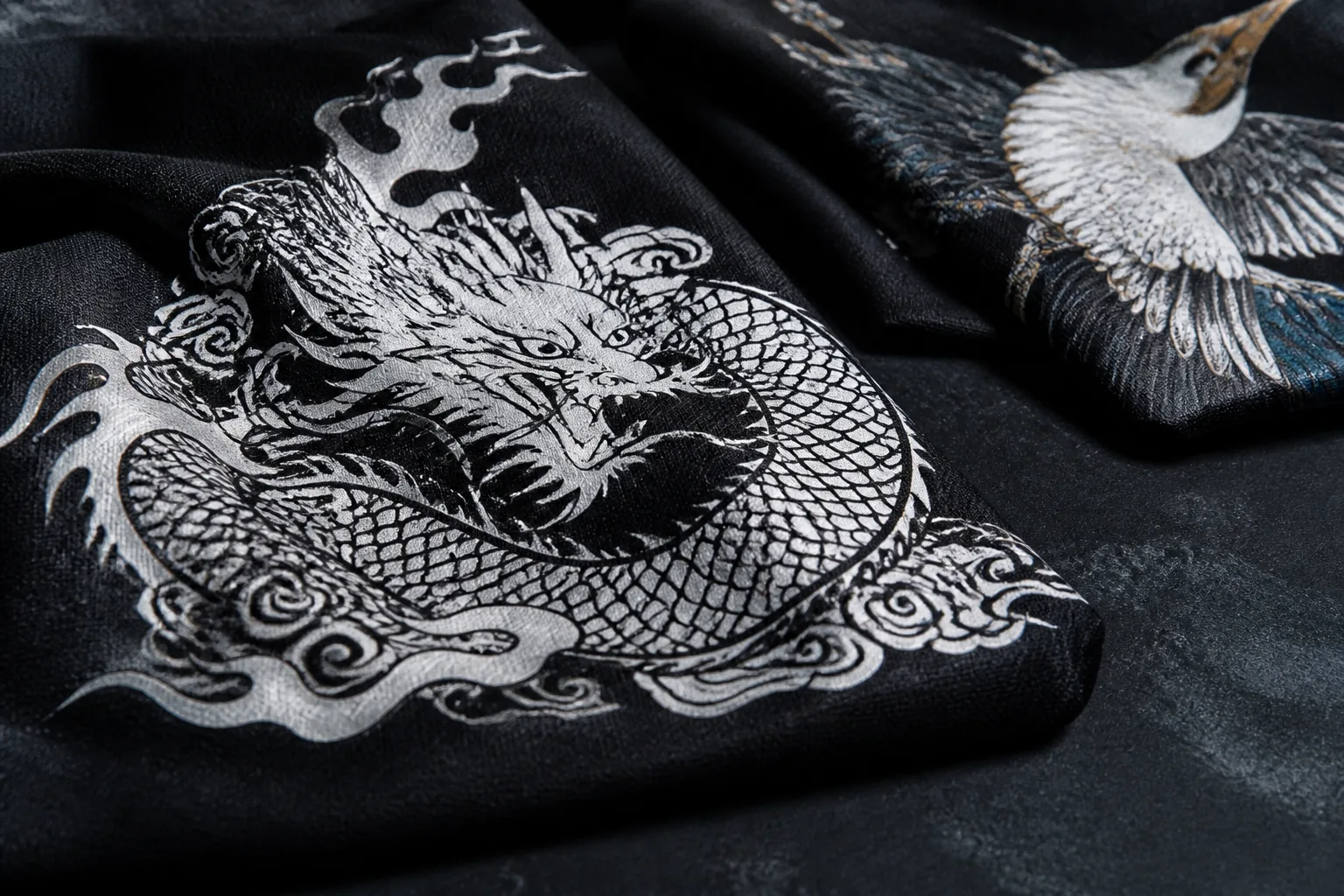
WHITE INK PERFORMANCE
Opacity, with
production discipline.
Performance is validated at the print, cure and finished-garment stage—not by one isolated fluid number.
Specified for the relevant textile process and final-use expectations.
Balanced for a textile outcome that remains comfortable to wear.
Designed around the fabric surface rather than a plastic-like finish.
Product documentation can be aligned to target-market compliance requirements.
Formulated for stable jetting under qualified storage and maintenance conditions.
WHITE
WHITE INK PLATFORM QUALIFICATION
Two routes.
One white standard.
DTF and DTG white ink are treated as distinct qualified systems. Final compatibility is confirmed against the printer, delivery path, waveform and curing process.
High-speed EpsonI3200 · I1600 · 4720
Desktop EpsonXP600 · L-series
Epson platformsDX5 · DX7 · 5113 · 4720 · I3200 · S3200
Industrial platformsStarFire 1024 · Ricoh G5 / G6 · Konica 512i / 1024i · Kyocera KJ4B
DTF WHITE INK · REFERENCE DATA
Opacity needs
controlled fluid data.
A practical planning range for slow-settling DTF white ink. Final approval must use the supplied M-INKJET grade, its handling guidance and a completed production trial.
- Viscosity @ 25°C
- 4–6 cP
- Surface tension
- 25–32 mN/m
- pH
- 6.5–9
- Fastness benchmark
- Light, perspiration, wash, wet rub and dry rub: grade 4–5 reference
- White behaviour
- Slow, soft settling with correct agitation or circulation required before and during production
- Standard packing
- 1 kg / bottle · 20 bottles / carton
- Carton
- 46 × 37 × 24 cm · N.W. 20 kg · G.W. 23 kg
- Epson platforms
- I3200 · I1600 · 4720 · XP600, subject to printer and circulation qualification
- Application route
- DTF white underbase for PET-film transfer; do not substitute for a dedicated DTG grade
- Conditional substrates
- Leather, nylon, coated and heat-sensitive fabrics require actual-substrate transfer testing
- Storage reference
- 15–35°C · 40–70% RH · sealed, clean, cool and dry
- Shelf-life reference
- Up to 12 months unopened; supplied label and batch documents prevail
- Care variables
- Agitation, circulation, filtration, nozzle condition, ink path and production idle time
Reference status: the values above are adapted from comparable published slow-settling DTF white-ink data. Opacity, settling, jetting and fastness must be confirmed on the selected M-INKJET grade and the actual printer, film, powder, fabric and cure process.
FAQ
Before you run white.
Why does white pigment ink settle?
White ink contains a high pigment load for opacity. Controlled settling is normal; use the specified agitation and circulation routine so the pigment returns to a uniform suspension before printing.
Can the same white ink be used for DTF and DTG?
DTF and DTG are different application systems. Use a dedicated grade matched to the transfer-film route or the garment-and-pretreatment route, then validate it with the printer and curing process.
How should I evaluate white-ink opacity?
Compare the cured result on your actual dark fabric, not wet ink alone. Review coverage, whiteness, colour brightness above the underbase, hand feel and wash performance together.
Can white ink fastness be tested as a liquid by itself?
No. Viscosity, surface tension, pH, settling and re-dispersion are incoming-fluid or maintenance checks. Wash, rubbing, perspiration and light fastness are evaluated on the completed printed textile using the selected DTF or DTG process and an agreed ISO, AATCC or buyer method.
Which printer details are needed for matching?
Share the printer model, printhead, ink-delivery and circulation configuration, current ink, colour channels and typical production environment.
How should white ink be stored?
Keep sealed product within the specified storage range, away from heat and direct sunlight. Follow the product guide for routine agitation, circulation and shelf-life control.
WHITE INK MATCH
Qualify opacity without losing the textile.
Share your application, printhead, dark fabric and curing conditions.
Build product RFQ ↗PRODUCT INFORMATION
PRODUCT GUIDEMSDSCOACERTIFICATE
Ask about handling guidance, available safety and batch documents, and the certification scope for your selected ink grade.
DTF CMYK + White MSDS options ↗