T-shirts & hoodies
Full-colour graphics, logos and short-run designs for light or dark cotton, polyester and blended garments.
DTF PRINTING INK / CMYK + WHITE
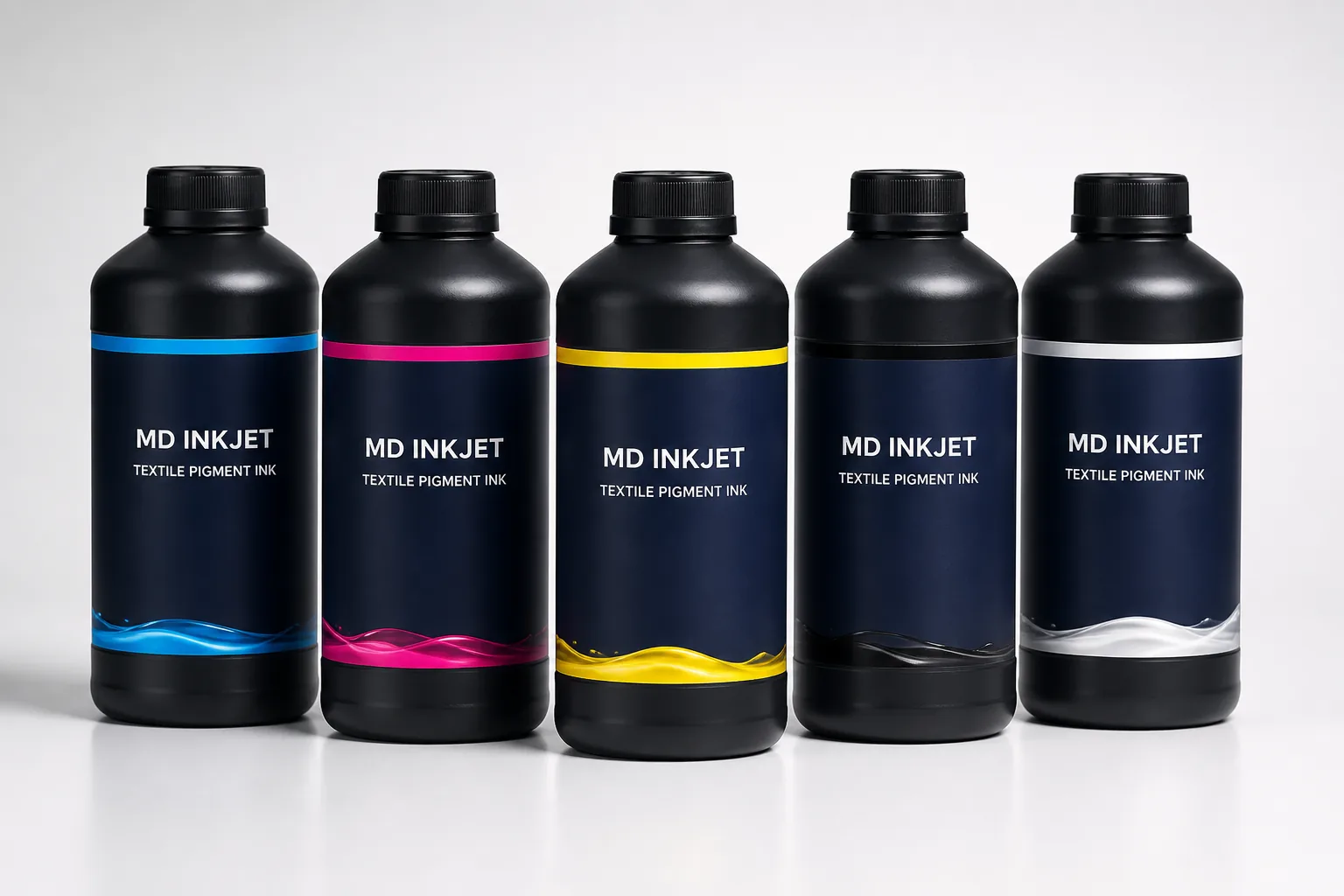
Water-based DTF printer ink for vivid PET-film transfers and strong bonding in a matched film, powder and heat-press system. Pair CMYK transfer ink with an opaque white underbase for apparel, workwear and textile accessories.
Request DTF ink samples ↗1 kg per bottle · 20 bottles per carton · 48 cartons per standard pallet
FROM INK TO APPLICATION
DTF textile ink supports a broad decoration range across apparel, accessories, workwear and outdoor textile products.
Application range includes cotton, polyester, blends, nylon, canvas, coated fabrics and umbrella panels; test the actual substrate with the selected film, powder and press settings before production.
DTF INK CORE ADVANTAGES
Built around production priorities: stable DTF printer-ink jetting, dependable white opacity, vivid CMYK color, strong adhesion and excellent water, wash and rub resistance under matched process conditions.
Nano-scale pigment dispersion, uniform particle control and multi-stage filtration help reduce nozzle-block risk and support long continuous print runs with clean jetting and fewer starvation, satellite and stringing defects.
Viscosity and surface tension are engineered for mainstream Epson DTF platforms including I3200, I1600 and XP600, supporting stable droplet formation in a qualified ink-delivery and waveform setup.
Settling can occur during storage, but the sediment is designed to remain soft and readily re-dispersible by correct agitation—helping avoid hard deposits in the ink path and printhead.
A balanced ink film helps the printed PET surface become dry to the touch without excessive re-tack, reducing full-sheet powder pick-up during the adhesive-powder stage.
Designed to cover dark fabrics without a grey or transparent cast and to create a dense, even foundation for brighter color.
ICC-profile-ready color supports accurate reproduction of details, fine lines and small text.
Designed to minimize visible color shift or darkening after transfer under a qualified curing and pressing process.
The transferred layer follows fabric stretch, supporting sportswear and stretch T-shirt applications without easy cracking or flaking.
Excellent resistance to everyday water exposure, repeated washing and surface rubbing under matched film, powder, curing, fabric and care conditions.
Designed for high adhesion with compatible DTF hot-melt powder across a practical heat-press window; 130–160°C is a system-reference range to be matched to the film, powder and fabric.
Balanced film build helps avoid an unnecessarily hard or board-like transfer feel.
Fast surface set helps control ink spread and supports high-speed powder-shaker workflows.
Designed for stable sealed storage, lower smoke and reduced workshop odor during qualified curing.
Suitable for transfers to cotton, polyester, blends, nylon, canvas, coated fabrics and umbrella panels, with an actual-substrate trial before production.
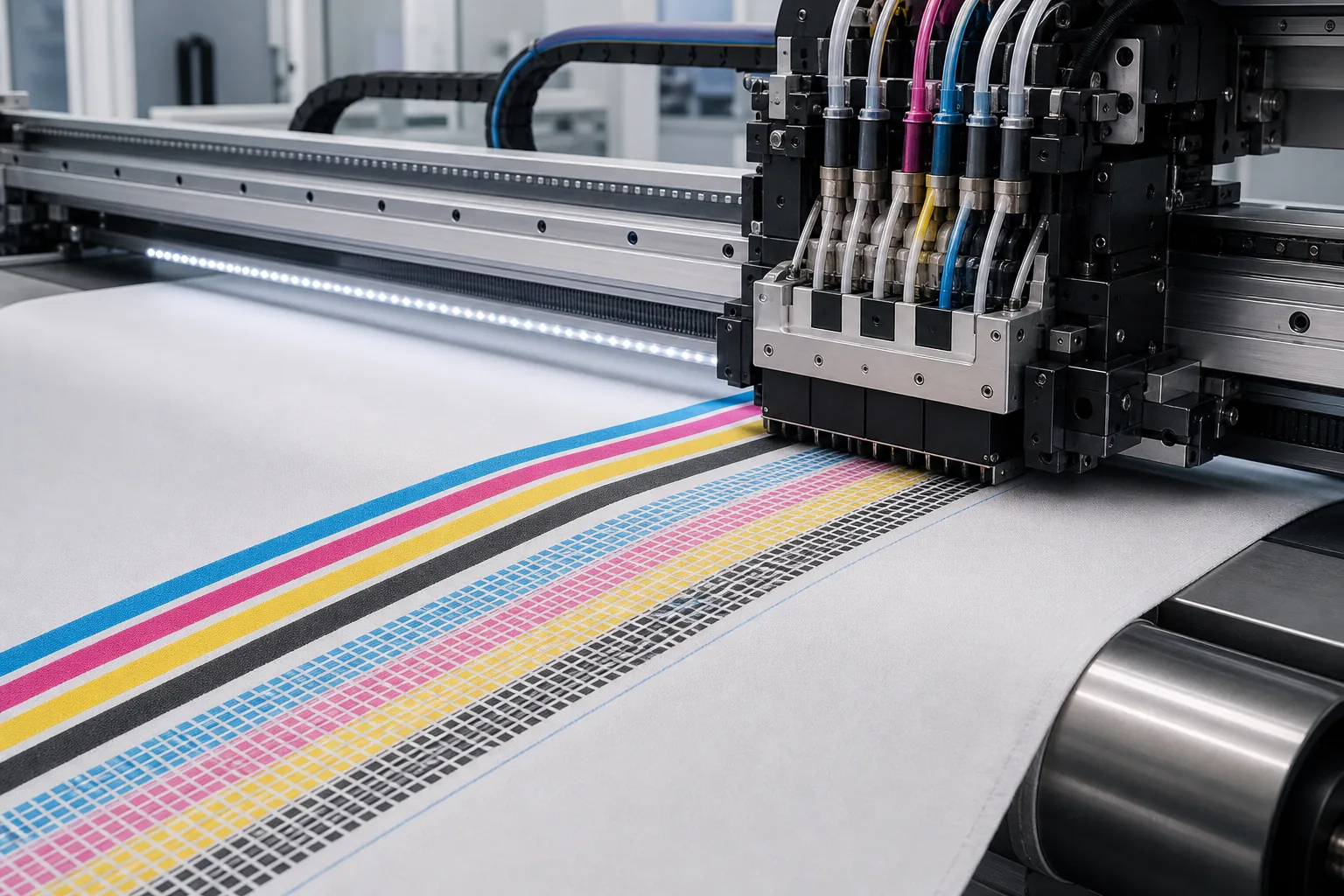 PRINT TEST · CONTINUOUS JETTING
Nozzle-check bands and continuous output help evaluate missing channels, jetting consistency and production stability on the qualified printer setup.
Request a technical discussion →Self-dispersed pigment colorants provide a more controlled starting platform for water-based textile ink. Surface functionality is designed on the pigment itself, helping formulators build repeatable aqueous dispersions before the DTF resin and process package are tuned around them.
Dispersing groups are anchored to the pigment surface, supporting dispersion stability and reducing reliance on freely migrating dispersant.
A controlled particle-size distribution supports consistent filtration and jettability targets on a qualified ink-delivery system.
The intended pigment surface and loading can support high colour strength while keeping the viscosity window designable for the selected printhead.
Different surface chemistries give the formulator a route to match pigment colorants with textile binders, humectants and production requirements.
A stable pigment platform helps balance colour development, storage behavior and jetting consistency. In DTF, it supports the complete print system: colour ink, white underbase, PET film, TPU powder and curing.
A self-dispersed colorant is a raw-material platform—distinct from dry organic pigment powder—not a finished DTF ink claim. Final performance must be qualified on the actual printer, ink path, RIP, film, powder, fabric and cure.
Process note: strong adhesion and excellent water, wash and rub resistance depend on the matched ink, film, powder, fabric, curing, pressing and care conditions. The 130–160°C press window is a system-reference range; confirm production settings on the actual substrate.
COLOR INK SYSTEM
Color performance belongs to the complete image build: RIP profile, white underbase, film, powder, cure and final transfer condition all matter.
The core color set for full-colour DTF printing on PET transfer film.
Pigment-based DTF printer ink developed for textile transfer workflows.
Optional red, orange, blue and green channels can be discussed for broader colour targeting.
Designed to be qualified for controlled detail through the intended printhead, waveform and RIP setup.
For dark-fabric transfers, the white layer forms the opacity foundation beneath the color image.
The powder completes the adhesive stage from printed film to final fabric transfer.
DTF INK COLOR RANGE / 17
A 17-color catalog architecture for product matching. Each selected channel must still be confirmed against the printer, RIP, intended gamut and production grade.
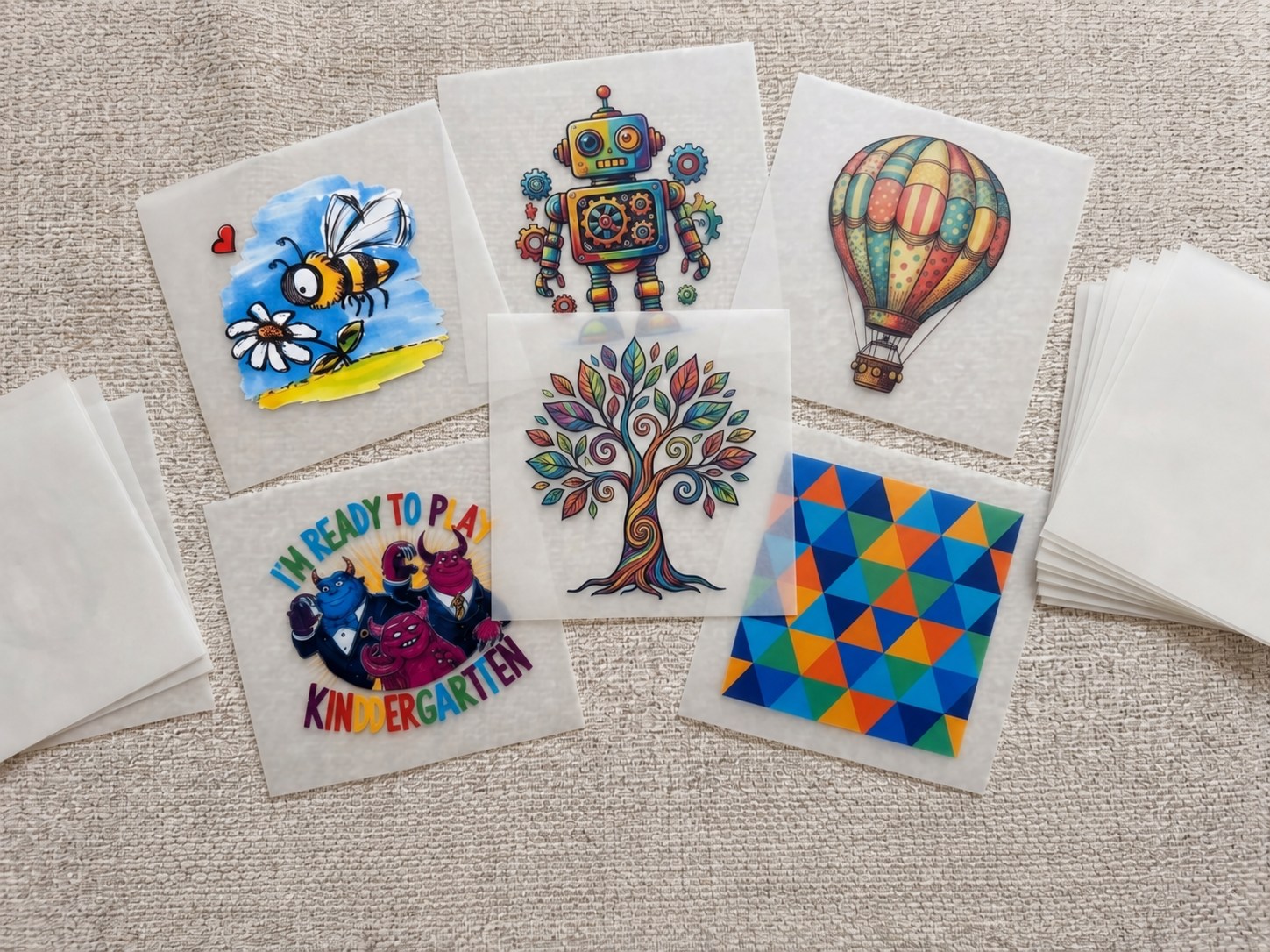 DTF TRANSFER FILM · COLOR & WHITE OUTPUT
Inks with high coverage and excellent air permeability deliver vivid and striking prints.
DTF COLOR INK PLATFORMS
Compatibility is confirmed against the printhead, ink-delivery path, waveform, RIP profile and complete DTF process—not through a blanket universal-compatibility claim.
Qualified seriesI3200 · I1600 · 4720
Qualified seriesXP600 · L-series
/ 03 · PRODUCTION WORKFLOW
Read the full production sequence, test variables and troubleshooting notes before finalising a production line.
DTF COLOR INK · REFERENCE DATA
Published market data provides a practical starting point. The supplied M-INKJET grade, batch COA and completed film–powder–fabric trial remain the release standard.
Reference status: these values are adapted from comparable published DTF product data for buyer planning. They are not an unconditional M-INKJET TDS or guarantee. Confirm the selected grade, lot, test standard and complete production system before a purchase specification or public claim.
DTF INK FAQ
DTF printing ink is a water-based textile transfer ink printed onto PET film. CMYK printer ink builds the image, white ink creates the opaque underbase, and hot-melt powder plus heat pressing bond the transfer to the fabric.
Prepare and mirror the artwork in the RIP, print CMYK and white onto the printable side of DTF film, apply hot-melt powder while the print is receptive, remove excess powder, cure the transfer, press it onto the garment, peel as specified by the film and post-press where required. See the complete DTF production workflow.
CMYK builds the color image, while DTF white ink provides the opacity layer used for most dark or colored fabrics. Match the RIP, printer channels and layer order to your production setup.
Use the selected film and powder supplier’s validated settings first. Epson’s published DTF values can be used as equipment-specific references, but the final cure, press temperature, time and pressure must be tested on the actual ink, film, powder, fabric and heat press.
The ink is formulated for strong adhesion and excellent water, wash and rub resistance under matched film, hot-melt powder, fabric, curing and heat-press conditions. Confirm the finished transfer against your intended test method and care conditions.
A common finished-textile test matrix uses ISO 105-C06 for laundering, ISO 105-X12 for dry and wet rubbing, ISO 105-E04 for perspiration and ISO 105-B02 for artificial-light fastness. US-market programs may instead specify AATCC TM61, TM8, TM15 and TM16.3. Test the completed transfer—not liquid ink alone—on the actual fabric after the agreed conditioning period.
The result is only meaningful when the report identifies the exact standard edition, test option or cycle, temperature, detergent, specimen conditioning and whether colour change or staining was rated. Results from different ISO, AATCC or buyer-specific methods should not be treated as directly equivalent.
No single ink-only test represents the complete DTF transfer. Agree a buyer qualification protocol using the actual ink, white underbase, film, powder, fabric, curing, press, peel and post-press conditions, then document visual adhesion, edge lift, cracking and stretch before and after the specified wash and rub tests.
Yes. Cotton, polyester, blends, nylon, coated fabrics and outdoor umbrella panels are all application candidates. Because coatings and heat response vary, test the actual substrate with the selected film, powder and press settings before production.
M-INKJET discusses sample sets, bottle or bulk packaging, OEM labelling and private-label requirements for qualified orders. Share the required colors, pack size, trial quantity and expected monthly demand for a tailored quotation.
Do not mix unknown ink systems. Share your current ink, printer and printhead details so a suitable cleaning, changeover and sample-test plan can be agreed.
Send the printer model, printhead, color channels, current ink, film, powder and target fabrics. Include the sample quantity, expected production volume and the performance issue you want to solve.
DTF INK SUPPLIER MATCH
Share your printhead, film, powder, RIP, target fabrics, sample quantity and expected monthly demand.
Build wholesale / OEM RFQ ↗Ask about handling guidance, available safety and batch documents, and the certification scope for your selected ink grade.
DTF CMYK + White MSDS options ↗